

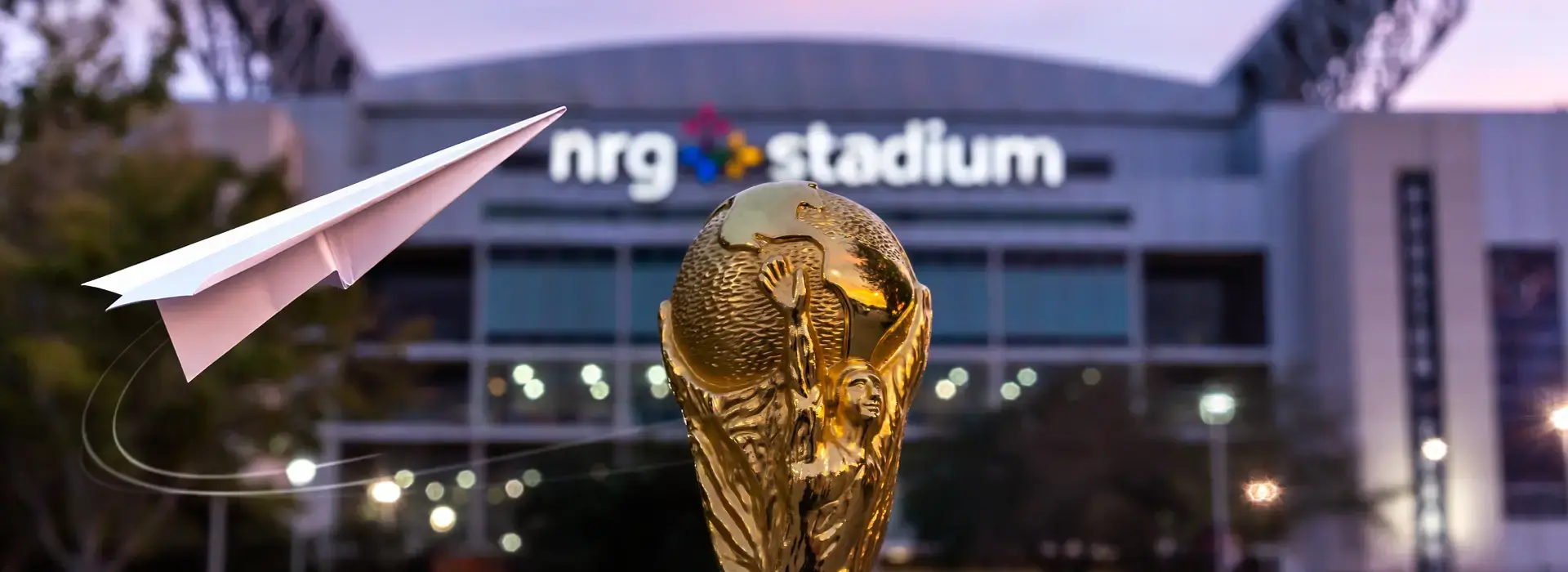
This piece was written by Elliott Cundieff, a copywriter on HexaGroup’s content team, lifelong Houstonian and avid World Cup fan who attended the Cape Verde vs. Saudi Arabia match on June 26.
As a native Houstonian, I’ve watched NRG Stadium host Texans games, rodeo nights, and college football bowl games for years. It’s practically part of the city’s routine.
This summer, I saw it become something completely different, while still feeling habitual.
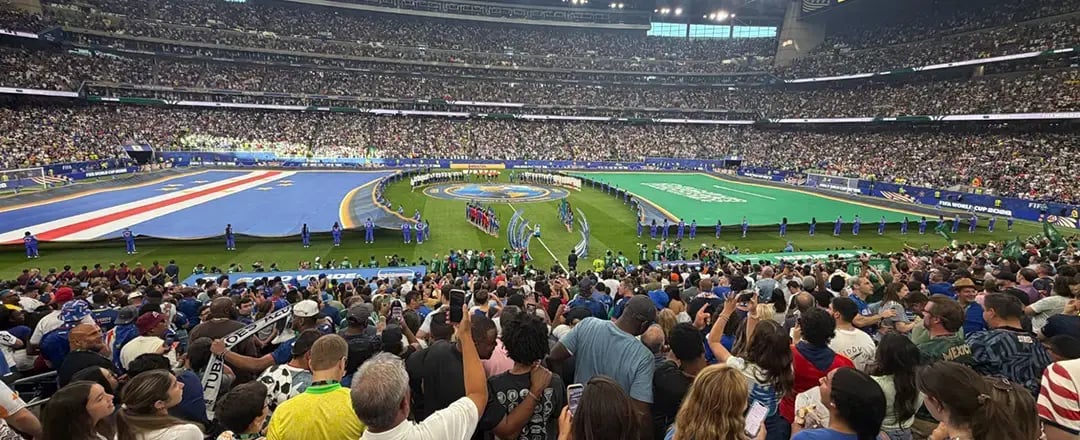
I was in the stands for Cape Verde vs. Saudi Arabia at what the rest of the world now knew as “Houston Stadium,” watching my hometown step onto a global stage. The pitch was new, the branding was new, and the feeling in the building was unlike any Texans game I’ve been to.
From my seat, it felt simple: Secure my ticket, get on the train, buy a popcorn, and watch the game. But that night made it clear how many people had spent months making sure all those moving parts worked, all the way down to the grass under the players’ boots.
From NRG Stadium to “Houston Stadium”
For most of my life, NRG Stadium has just been “NRG.” Texans games on Sundays, the Houston Livestock Show and Rodeo every spring, and the occasional big concert. You hop off Kirby, walk through security, and the building feels like home.
Then FIFA came in, and the name on the building changed. During the World Cup, NRG Stadium was temporarily rebranded as “Houston Stadium” because FIFA requires host venues to strip non-sponsor corporate names and signage. Crews removed NRG logos from the roof and facades, installed temporary FIFA and Houston Stadium signage, and prepared to revert again once the tournament ended and the Texans’ season approached.
The key thing is that the building did not change owners or core purpose. The venue operations, staff, and underlying value stayed the same. The city just had to adjust how it presented itself to the world because the event's rules demanded it.
Engineering a world-class pitch on a tight clock
I’ve seen plenty of NFL games there, and even on TV, you can tell the field is built for American football, not a high-level soccer match. For FIFA, that wasn’t good enough.
During the World Cup, FIFA expects a natural grass pitch that meets strict standards, even in an indoor stadium in Houston’s climate.
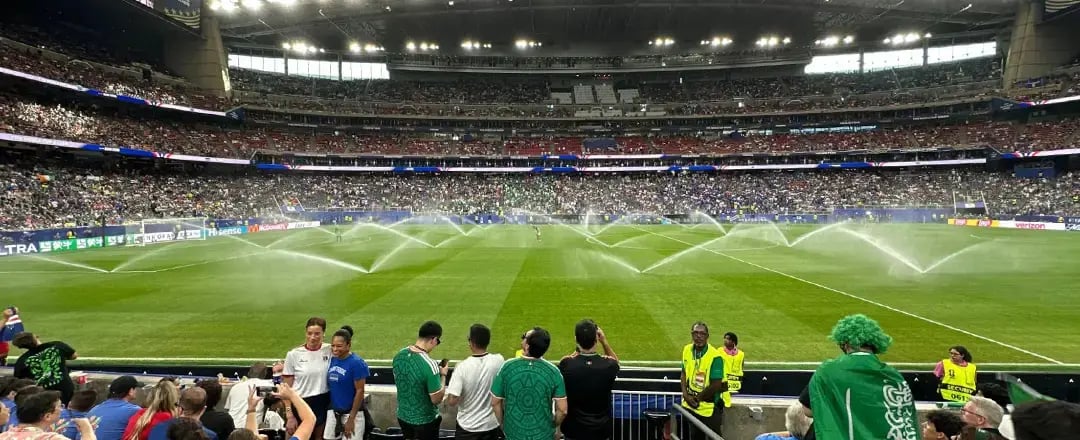
To get there, Houston relied on a turf system that started long before anyone saw green inside the building. Natural grass was grown for about 18 months in the Denver, Colorado area, then rolled up and loaded into refrigerated trucks for the roughly 18-hour trip to Houston. Once it arrived, crews built the field in layers from the ground up, with a base system, drainage, sand, and a carefully selected cool-season grass mix designed to perform inside a domed environment.
On top of that, the pitch used a hybrid design with natural grass stitched into a synthetic support system that helped keep the surface stable and safe under repeated use, in line with FIFA’s requirement for hybrid turf across 2026 venues. Because the stadium is indoors, specialist crews deployed LED grow lights shipped from the Netherlands to keep the imported grass alive between matches, while building managers maintained a tight temperature band around the low 70s.
All of this happened on a compressed schedule. Local coverage described the project as “years in the making,” but the physical installation window was short, with de-branding and turf work kicking off in mid-May ahead of June matches, followed by a quick turnaround back to NFL mode.
Watching the match, none of that was visible. In section 128, it was just a bright, perfect playing surface. But you could feel how much work had gone into making sure every pass, tackle, and set piece played out on a proper World Cup pitch.
The invisible logistics work
While the stadium transformation grabbed the headlines, the real stress test played out across the city. Transit, safety, and heat management all had to work at once.
Houston expected hundreds of thousands of visitors for the seven World Cup matches—and that’s on top of normal residents, commuters, and people in town for other events. The Metropolitan Transit Authority of Harris County (METRO) built a plan to expand service across its system during the tournament so visitors and everyday riders could move safely, reliably, and efficiently.
On matchday, trains felt more frequent than I’m used to on a normal weeknight. Announcements made it clear which stops to use, how to connect from Park & Ride lots or downtown hotels, and which direction to head for Houston Stadium. Stations were busy but organized. Platforms didn’t feel like they were on the edge of chaos.
Outside the stadium, wayfinding and signage felt slightly different, too. New World Cup marks and “Houston Stadium” branding showed up where Texans logos usually live. Security and crowd control gave the night a different rhythm than a typical NFL game.
None of that ends up on a scoreboard. There’s no stat for “number of fans who got in and out without thinking about the system.” But from the perspective of someone just trying to get to their seat, that quiet, invisible work made everything feel smooth.
Cape Verde’s first World Cup run
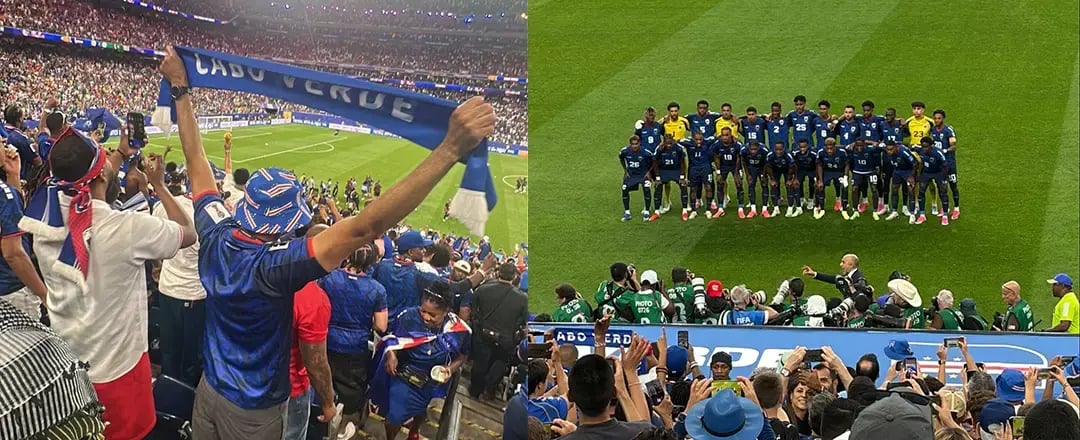
The match itself was technically a 0-0 draw, but the energy inside the stadium never felt flat.
Cape Verde was making its first-ever appearance at a World Cup. For a country with just over half a million people, that alone is a huge step. By the time they took the field in Houston for the final match of the group stage, they had already surprised many neutrals, and this game mattered. A draw against Saudi Arabia would be enough to push them through to the knockout stage.
You could feel that tension. Every half-chance, every break down the wing, and every corner felt bigger than the scoreline. Cape Verde defended with real grit, pressed when they had space, and played like they knew they were 90 minutes away from making history. Saudi Arabia pushed too, trying to find a breakthrough that never came.
Even without a goal, the crowd stayed locked in. There were flags from both sides scattered around the stadium, drums, chants, and pockets of fans who had clearly traveled far to see this in person. It was the kind of atmosphere where you don’t need the ball in the net to understand how important the game is.
When the final whistle went and Cape Verde had the point they needed, you could feel the release in the stands. A small island nation in its first World Cup stayed alive and advanced out of the group with a scoreless draw in Houston. It’s the kind of story you remember, even if it doesn’t show up on highlight reels the way a 4-3 thriller would.
If you spend your days in energy or industrial B2B, this kind of night is not as far from your world as it might look. Your version of Houston’s World Cup could be a product launch, entry to a new market, a recruiting push, a tech implementation or even scaling to meet the needs of a major client. You don’t always control the outside dynamics, but you do control how ready you are when the whistle blows. And we’re here to help.

Unlock growth without boundaries
Need region-specific fresh eggs and flying lessons? Learn more about BBN, the agency that unites co-pilots from all corners of the sky.
.png?width=605&height=451&name=melissa%20groo%20flying%20bird%20(1).png)