For decades, the funnel was the undisputed model for B2B growth. Marketers poured prospects in at the top, and customers fell out the bottom. It worked. Until it didn’t.
Today’s B2B buyers complete most of their research before speaking to a salesperson. They read third-party reviews and verify them with their own networks. When they become customers, what happens next matters as much as how they got there.
The funnel, by design, ignores all of that. In 2026, that’s an absolutely fatal flaw.
If your customer experience isn't optimized, you can't compete. The solution is a flywheel approach that maintains momentum from the first touchpoint to lasting loyalty. It’s a methodology much like our Growth Engine, which connects branding, marketing, sales, and service so that customers don’t just convert, but stick around and actually help you grow.
Why the funnel fails modern B2B
The funnel’s main issue is treating customers as a destination. All the momentum you build with a prospect evaporates the moment they sign. You’re starting over with nothing to show from the relationship you built.
This might have been an acceptable tradeoff when word of mouth was hard to measure and buyers depended on your content to form opinions. But trust in businesses is declining, while trust in peer recommendations is at an all-time high. Research from HubSpot found that more than 80% of customers trust recommendations from family and friends over company messaging, and more than half report trusting the businesses they buy from less than they used to.
Since the majority of buying decisions are influenced by people outside your marketing reach, you would be actively leaving growth on the table by discarding customers after conversion.
The physics of a flywheel
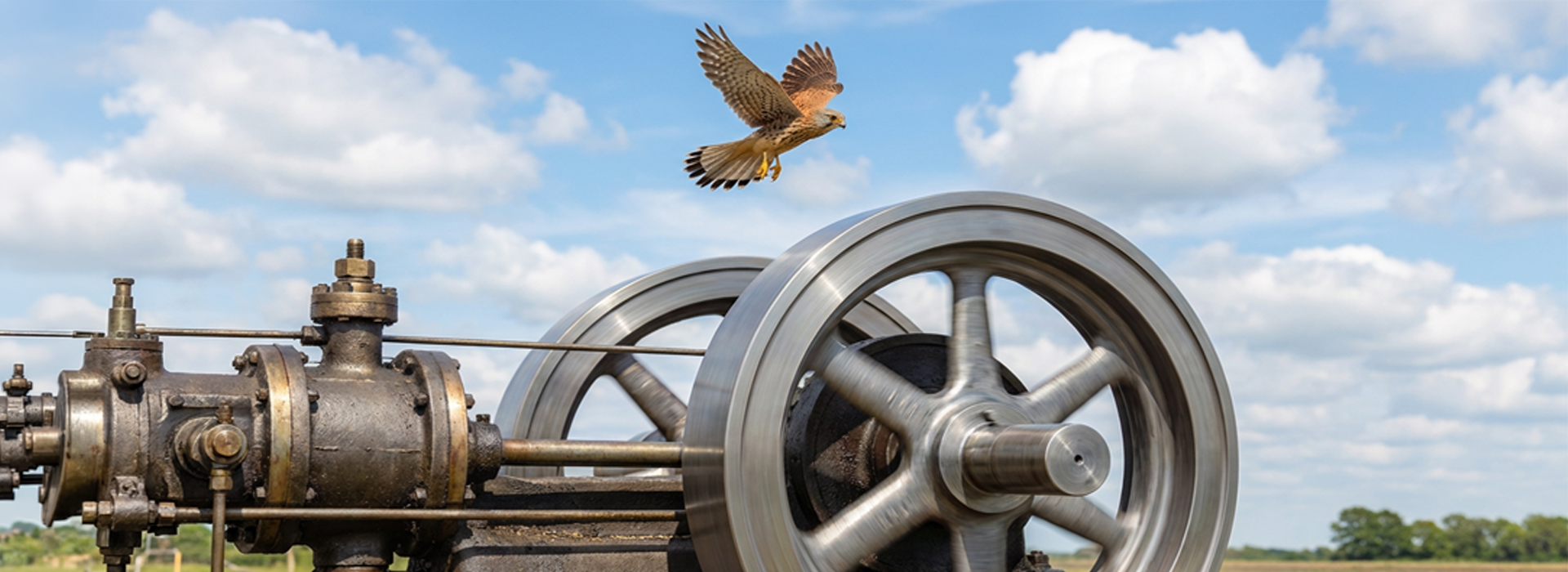
The flywheel is a concept borrowed from engineering history. Invented by James Watt more than 200 years ago, a flywheel is remarkable for its ability to store and release energy. Its momentum depends on three main variables: its spin rate, the friction it encounters, and its size.
HubSpot used this model to describe how businesses grow when customers are placed at the center, noticing that happy customers generate their own momentum. They refer prospects themselves and advocate for you within their industry. Instead of starting from zero with each new sales cycle, a flywheel-oriented business compounds the energy it has already generated.
When you add more customers and delight them, the wheel gets heavier and spins faster with less effort. When you reduce friction in how teams hand off to each other, that momentum accelerates further, and the flywheel keeps spinning. That’s exactly how growth is supposed to be generated.
The three phases: Attract, Engage, Delight
HubSpot organized the flywheel model around three stages drawn from the inbound methodology, each one feeding into the next in a continuous loop.
During the first phase, Attract, you earn attention by creating content that answers the questions your prospects are actually asking. The goal is to give value before extracting it.
In the second phase, Engage, you make it easy for buyers to interact on their own terms. This includes everything from free trials and self-service tools to personalized nurturing and a sales process that solves the prospect's problem. The test of engagement is whether you’re opening relationships or closing deals.
Finally, in the Delight phase, you help customers succeed in ways that go beyond the transaction. You provide active support and genuine interest in their outcomes, transforming your customers into promoters. That delight then feeds back into the attract phase, because the best case for your business is the success of the people who already trusted you with theirs.
What this means for B2B growth
The shift from funnel to flywheel involves a different perspective of what success actually looks like.
Companies running funnel models only optimize to generate traffic and leads. Companies running flywheel models optimize for the full lifecycle of every potential customer, from the first touchpoint with the brand to lasting brand loyalty. As HubSpot put it, friction kills flywheels. Eliminating that friction becomes paramount.
This is the same principle behind HexaGroup’s Growth Engine, our proprietary way of applying the flywheel’s physics to complex B2B environments. When marketing, branding, service, and sales all reinforce the others, the customer experience blossoms across the entire lifecycle. Delight compounds through every interaction and feeds back into how deeply customers become embedded in your growth story.
Our Growth Engine takes things a step further: We use data to identify where friction exists and eliminate it. We identify exactly what’s killing momentum, preventing full integration and, as a result, slowing the wheel—or as we call it, the Growth Engine. After spotting the silos, we eliminate them so that the engine runs as efficiently as possible, using all the tools at our disposal to do so. From MarTech that integrates data across the customer journey to truly connected marketing strategies, we help keep our clients’ flywheel spinning.
The funnel asked, “How do we get more customers in?” The flywheel asks a better question: “How do we give those customers such an optimal experience that they help us grow?” That question will lead you to a different kind of business—one where growth is precision-engineered. With today’s competitive B2B landscape, that’s the only kind of business that’s sustainable.
Ready to find the friction in your system? Take our quick GOsurvey.


.png)


.png?width=605&height=451&name=melissa%20groo%20flying%20bird%20(1).png)